Controlling NALO in a Sewage Treatment Plant
How targeted FOG digestion, biological foam control, and active sludge-age management eliminated NALO driven foaming.
INDEPENDENT DATA COLLECTED AND SUBMITTED BY:
Town of Rogersville Sewage Treatment Plant
Background
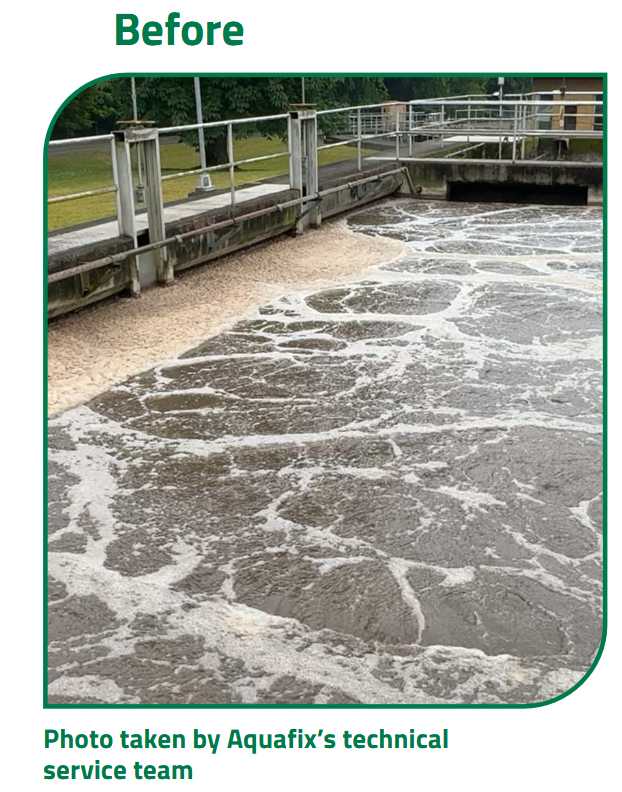
The Town of Rogersville Sewage Treatment Plant is an activated sludge system that has an average daily flow of .77 MGD and a design capacity of 1.3 MGD. The system serves approximately 4,500 residents. In May of 2026 the town’s wastewater team began investigating foam in its wastewater treatment plant. Rogersville’s operators consulted with Aquafix Laboratories to discuss the issue and get preliminary recommendations to alleviate the foam.
Initial Consult
Based on the initial conversation with the Town of Rogersville, it was determined the most likely cause foaming was due to FOG loading. The foam was described as thick, stable, and dark brown, which is consistent with Nocardia-like organisms (NALO) or microthrix. To verify the filaments and cause of foaming, it was recommended the Town of Rogersville submit a sample to Aquafix Laboratories for a Microanalysis and Filament Identification Origins Test.
Laboratory Analysis
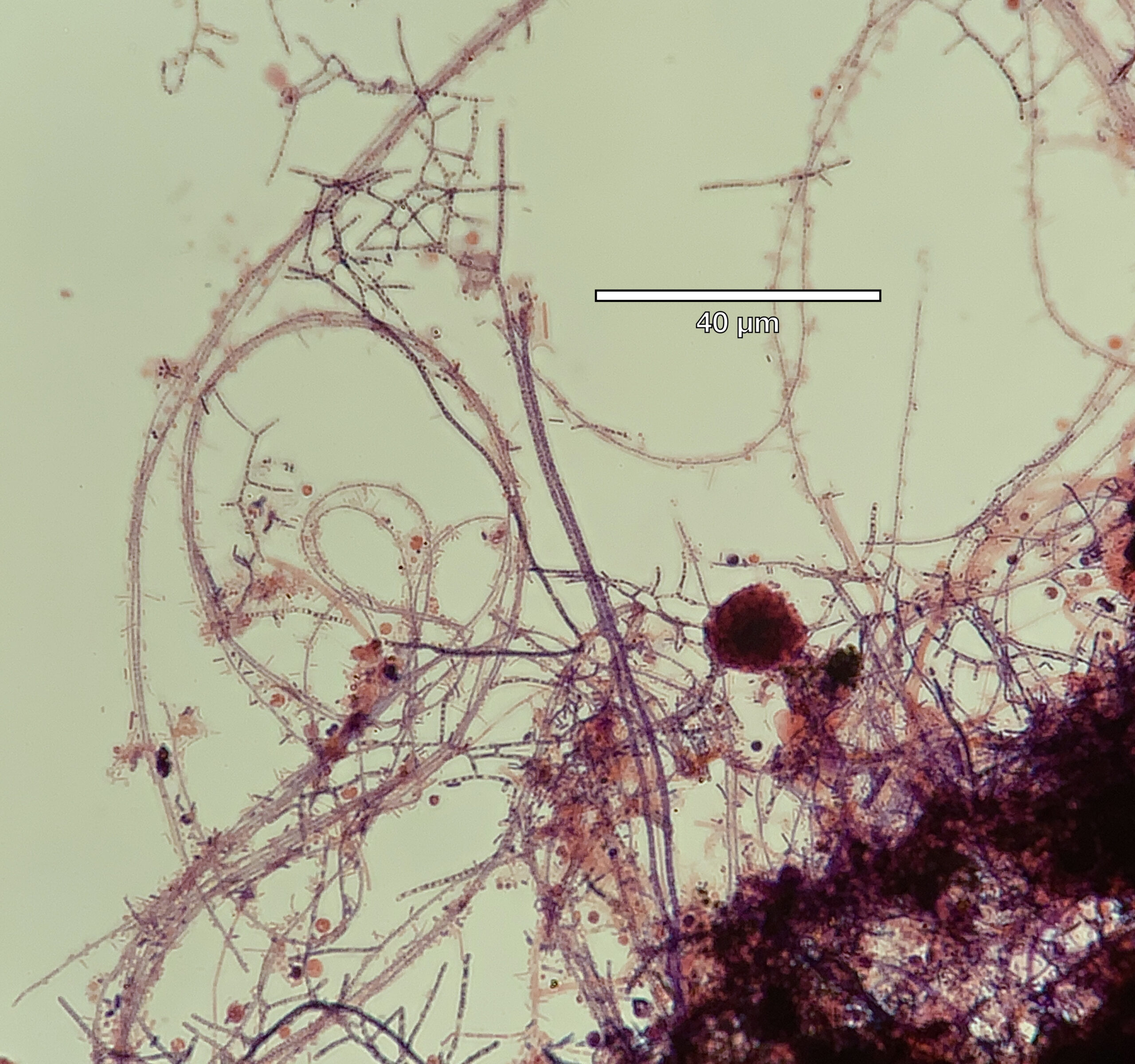
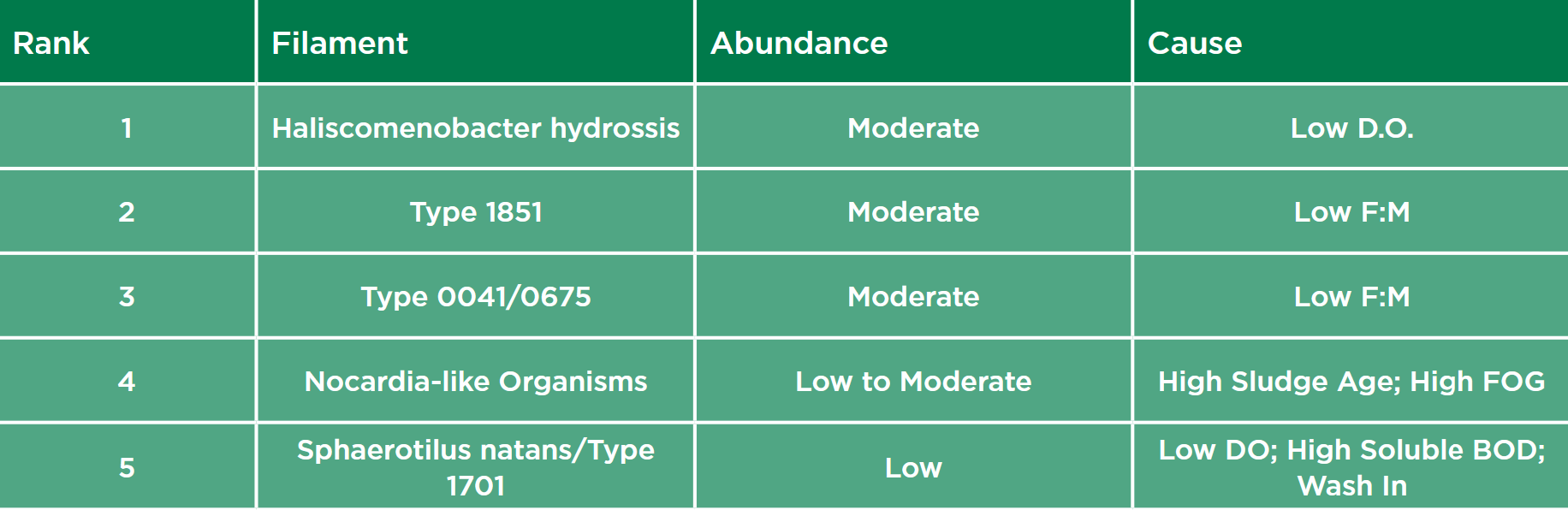
The Town of Rogersville submitted two samples: one foam sample and one MLSS sample. Overall, floc were dominantly irregular in shape, loosely compacted, open, and medium in size. Contributing to their size is the moderate levels of extracellular polymeric substances (EPS) within floc. The dominant filaments present were moderate levels of Type 1851, Type 0041/0675, and Haliscomenobacter hydrossis. Also present were low to moderate levels of Nocardia-like Organisms (NALO).
Mixed Liquor
Foam
Based on the information, the cause of foaming is likely due to filamentous bacteria, specifically NALO. Type 1851 and Type 0041/0675 thrive in low F:M conditions and typically do not cause issues. However, Type 1851 has been known to lead t bulking when bundled. H. hydrossis also typically does not cause issues, rather it acts as an indicator organism to low dissolved oxygen (DO) conditions. When abundant enough, NALO forms a tangled mat-like structure. This structure then floats by attaching to the air bubbles produced through aeration. Normally, upon surfacing, these bubbles would pop; however, the filamentous mat creates a dam over the bubbles preventing them from doing so. Unable to pop, a strong, stable foam forms. This foam layer is prevents sufficient oxygenation through the basin leading to the low DO observations in the Mixed Liquor sample. NALO thrives in systems with high levels of incoming FOG and a high microbial sludge age. When abundant enough this filament can cause foaming and/or bulking to occur.
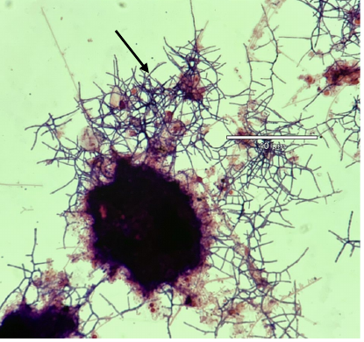
600x (m) Gram Stain: Very high NALO was
observed in the foam sample.
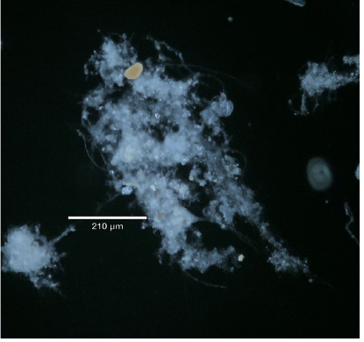
100x (m) Darkfield: Floc was somewhat open,
loosely compacted, and irregular
Recommendations
Based on the results of the Microanalysis and Filament Identification Origins Test, Aquafix Laboratories recommended biological augmentation and sludge-age management. The biological augmentation program utilizes Qwik-Zyme L and FoamBuster. Qwik-Zyme L is a blend of concentrated enzymes that breaks down long-chain fatty acids that drive FOG filament growth. Foam Buster supplements key nutrients to stimulate floc forming bacteria to outcompete foaming filaments. These nutrients better balance the nutrient profile to encourage the uptake of simple carbons – short chain and volatile fatty acids. An initial treatment of 3-gallons of Qwik-Zyme L a per day and 8 pounds of Foam Buster per week was recommended. For solids management, Aquafix Laboratories recommended reducing the sludge age via heavier wasting practices.
Follow Up Laboratory Analysis 1
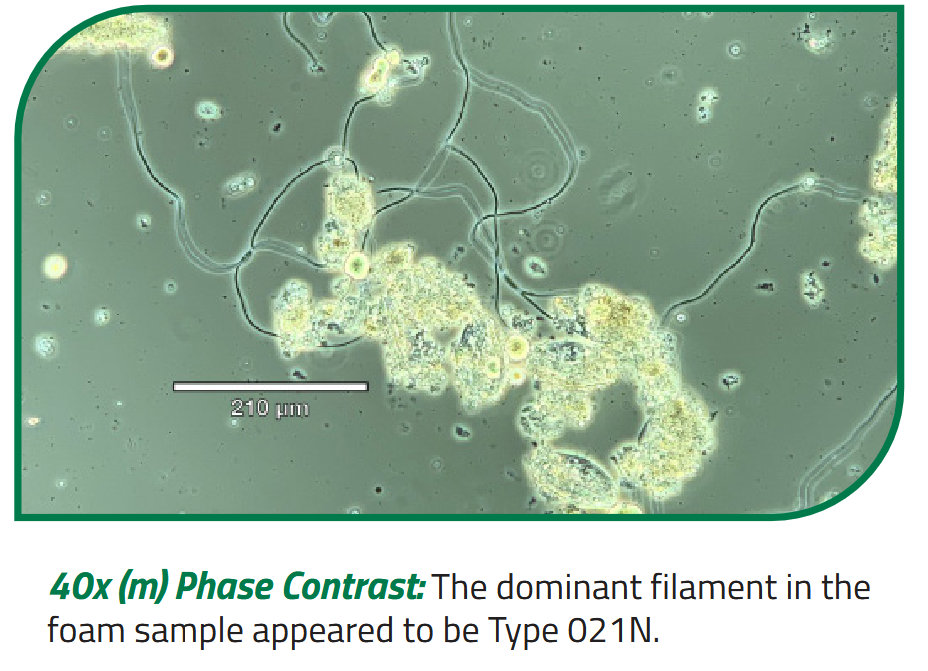
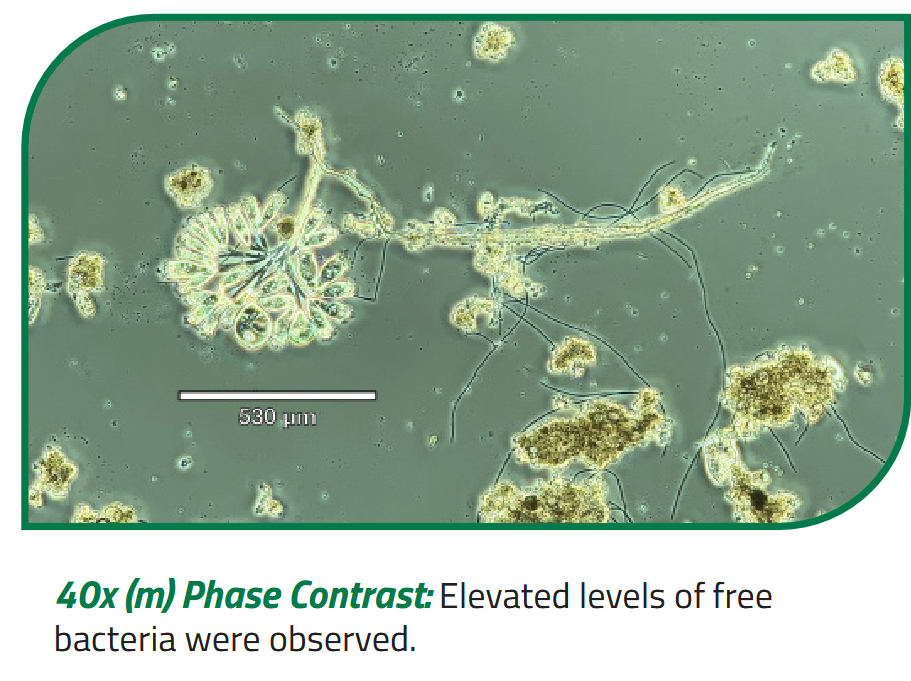
Overall, the Rogersville microbial population changed substantially since observations from 5/7/26. Levels of filamentous organisms diminished from moderate to low levels. S. natans, H. hydrossis, and Nocardia like organisms (NALO) were absent in the mixed liquor sample. The dominant filament shifted to almost entirely Type 021N. Type 021N was not widespread but was observed in several spots as clumps. Free bacteria in the bulk liquid increased since previous observations which may have resulted from reduction of filaments, changes to wasting, or incoming toxicity.
Floc were more rounded and compacted compared to 5/7/26 which typically corresponds with rapid settling with elevated supernatant turbidity.
In the foam sample, NALO was entirely absent. The dominant filament in the foam was Type 021N, and the foam appeared to be composed mostly of broken up floc forming bacteria, as opposed to filamentous microorganisms like NALO.
Mixed Liquor

Foam
Recommendations
Based on the results of the Microanalysis and Filament Identification Origins Test, Aquafix Laboratories recommended continuing the biological augmentation and sludge-age management to prevent regression. For the sludge-age management, Aquafix Laboratories recommended increasing the sludge age. No change was recommended for the biological augmentation.
Follow Up Laboratory Analysis 2
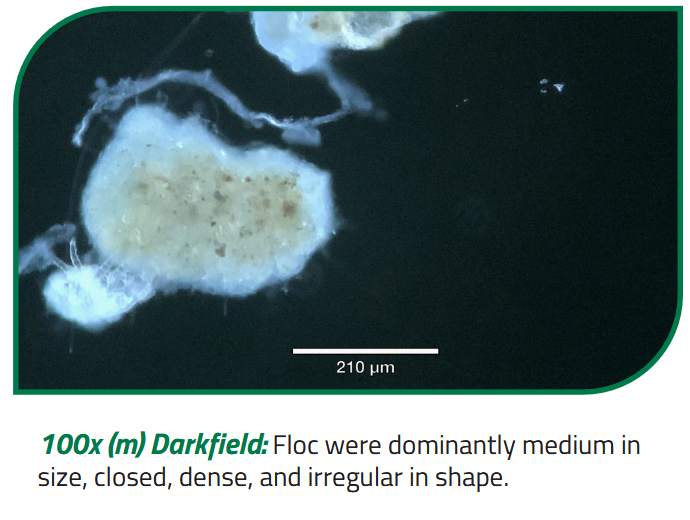
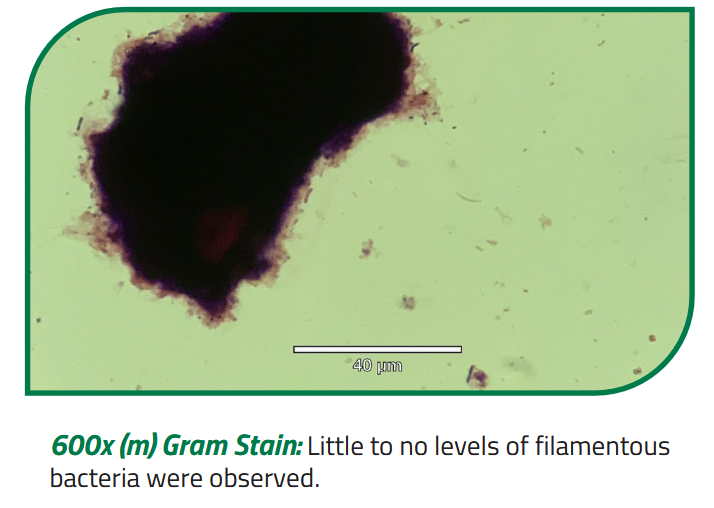
The Town of Rogersville submitted another MLSS sample as no foaming was observed on site. Overall, floc were dominantly medium in size, rounded, dense, and closed. Contributing to their structure was moderate levels of extracellular polymeric substances (EPS) within floc. Low levels of filamentous bacteria were observed in the Mixed Liquor sample, specifically Type 0041/0675. This filament typically does not cause issues, rather it acts as an indicator organism to the low F:M conditions it thrives in. No NALO was observed in the sample. The sample contained low amounts of filaments overall when compared to previous samples.
Mixed Liquor

Recommendations
Based on the results of the Microanalysis and Filament Identification Origins Test, Aquafix Laboratories recommended continuing the biological augmentation and sludge-age management to prevent regression. For the sludge-age management, Aquafix Laboratories recommended increasing the sludge age. No change was recommended for the biological augmentation.
Observed Outcome and Conclusion
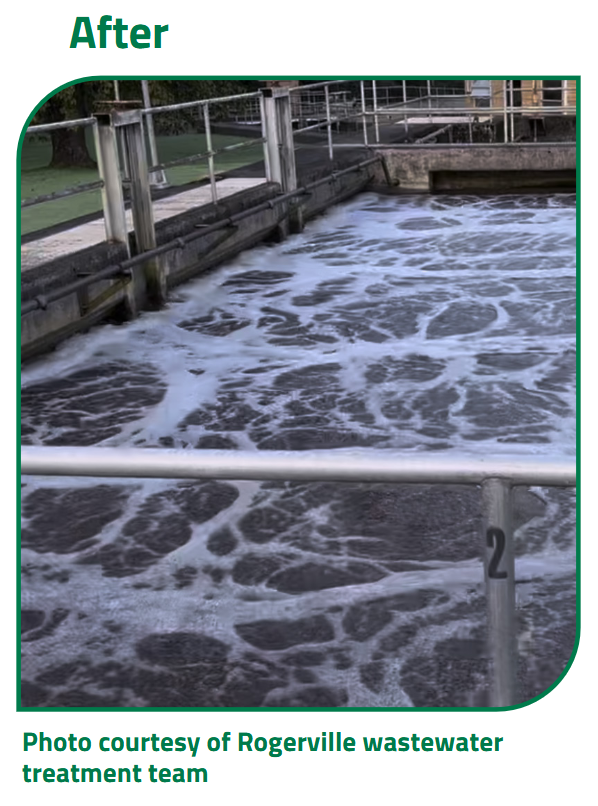
Following the consultations, laboratory recommendations, and subsequent treatments, the Town of Rogersville Sewage Treatment Plant was able to eliminate NALO driven foaming. Sludge-age control and targeted biological augmentation via Qwik-Zyme L and FoamBuster improved FOG digestion and supported healthier floc formation. Laboratory testing was used to document the biological health of the sewage treatment plant before, during, and after the treatments. Together, the data from the laboratory testing shows NALO abundance decreased throughout the treatment period and ultimately was eliminated from the foam and MLSS samples.